How to Ask Your Boss to Work From Home: A Proposal Template
Want to work remotely or add more home days? Learn how to build a persuasive remote work proposal, address your manager's concerns and propose a trial period.
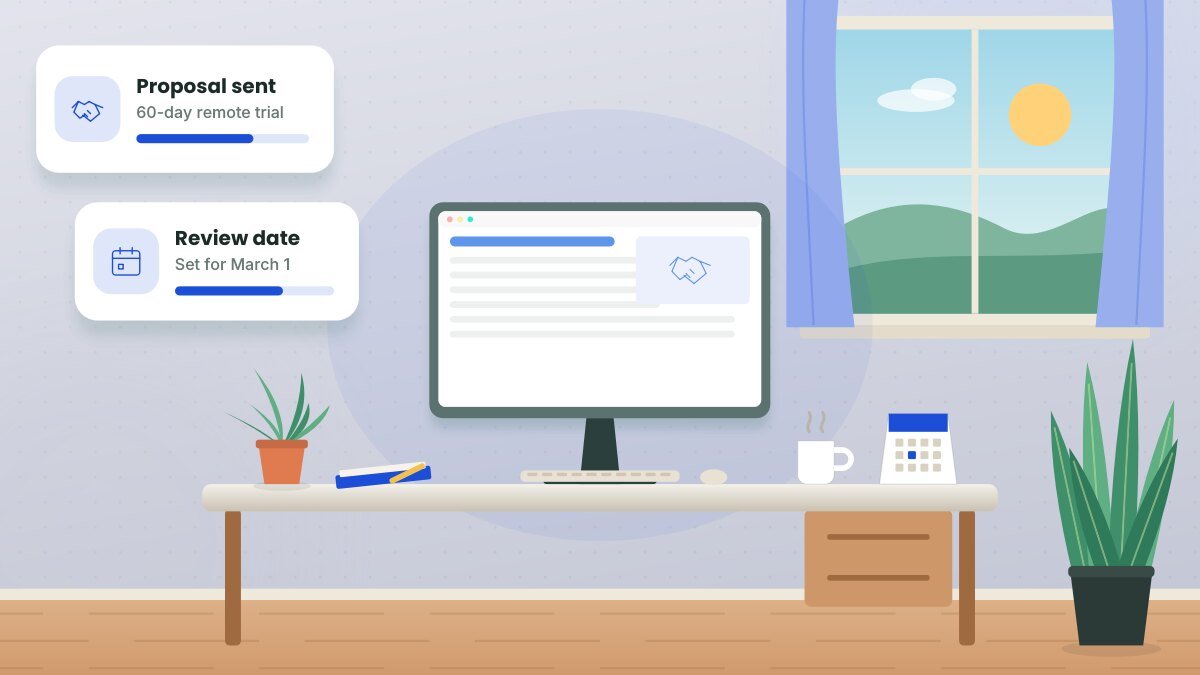
If you'd like to work from home — full time or a few days a week — the way you ask matters. A casual "Can I work from home more?" is easy to turn down. A thoughtful proposal that focuses on business results, anticipates concerns and suggests a trial period is much more persuasive. Here's how to build one.
Step 1: Understand your company's position
Before you ask, gather information:
- Does your company have a formal remote or hybrid work policy?
- Do others in similar roles work remotely?
- How does your manager feel about remote work?
- Are there legal or security considerations for your role?
If a policy exists, frame your request within it. If not, your proposal could become a model for others.
Step 2: Focus on business benefits
Your manager's main question will be, "How will this affect the work?" Center your proposal on outcomes, not personal convenience. Potential benefits include:
- More focused time for deep work without office interruptions
- Time saved from commuting reinvested in work or wellbeing
- Flexibility to cover early or late hours for colleagues or clients in other time zones
- Improved retention and engagement
Use evidence from your own track record, such as successful remote days you've already worked.
Step 3: Address concerns before they come up
Managers commonly worry about:
- Communication: How will they reach you?
- Productivity: How will they know work is getting done?
- Collaboration: Will the team suffer?
- Security: Will company data be protected?
Answer each concern with a specific plan. For example: "I'll be available on chat and phone during core hours of 9 a.m. to 5 p.m. Eastern, share a written end-of-week update and attend in-person meetings as needed."
Step 4: Propose a trial period
A trial lowers the risk for your manager. Suggest a 30-, 60- or 90-day trial with clear success measures and a review meeting at the end.
Make success measurable. Agree on what "working well" looks like — for example, meeting deadlines, response times within an agreed window and positive feedback from stakeholders. Measurable criteria make the review objective.
Step 5: Write a short proposal
Put your request in writing. A one-page proposal shows professionalism and gives your manager something to share with HR or leadership.
Remote work proposal template
Subject: Proposal for a remote work trial
Request: I'd like to propose working remotely [full time / on Mondays, Wednesdays and Fridays] starting [date], beginning with a [60]-day trial.
Why this benefits the team: Working remotely will allow me to [focus on X project / save X hours of commuting each week / cover early calls with our West Coast clients]. On the remote days I've worked previously, I [completed X / met all deadlines].
How I'll stay connected:
- Available on [chat / phone / email] during core hours of [hours and time zone]
- Attend team meetings by video and in person when needed
- Share a written weekly update on priorities and progress
My workspace: I have a dedicated, quiet workspace with reliable internet, and I'll follow all company security policies, including VPN use.
Measuring success: I suggest we review the arrangement on [date] using these criteria: [deadlines met, response times, quality of work, team feedback].
Next steps: I'd welcome the chance to discuss this and adjust the plan to fit the team's needs.
Step 6: Have the conversation
Schedule a dedicated meeting rather than asking in passing. Walk through your proposal, listen to concerns and be open to compromise — for example, starting with two remote days instead of five.
Step 7: Over-deliver during the trial
During your trial, communicate proactively, meet deadlines and be visibly responsive. Keep notes on accomplishments to share at your review.
If the answer is no
Ask what would need to change for the answer to be yes in the future. Sometimes the timing, a project or a policy is the barrier. If remote work is essential for you and your company can't support it, you may decide to explore remote-friendly employers.
Related guide: How to Get Promoted When You Work Remotely
Key takeaways
- Research your company's policies and your manager's concerns first.
- Frame your request around business benefits and measurable outcomes.
- Address communication, productivity and security in advance.
- Propose a trial period with a clear review date.
Frequently asked questions
Should I mention personal reasons?
You can mention them briefly if relevant, but focus on how the arrangement supports your work. If you need remote work as an accommodation for a disability, talk with HR about your rights under the ADA.
What if my coworkers aren't allowed to work remotely?
Explain how your role and results make the arrangement workable, and stay open to how leadership wants to handle fairness.
How long should a trial period be?
Thirty to ninety days is typical — long enough to see results but short enough to feel low-risk.
This article is for general informational purposes and isn’t a substitute for professional legal, medical, tax or financial advice. See our disclaimer.


