Sleep and Remote Work: How to Protect Your Rest
Remote work can disrupt sleep with late-night emails and blurred routines. Learn evidence-based habits to protect your sleep and wake up ready for the workday.
Remote work can be great for sleep — no early commute, more flexibility and fewer rushed mornings. But it can also undermine rest. Without clear boundaries, work creeps into evenings, screens stay on until bedtime and wake-up times drift. Since sleep affects focus, mood and health, protecting it is one of the best things you can do for your work performance.
How much sleep do adults need?
The CDC recommends that adults ages 18 to 60 get at least seven hours of sleep per night. Quality matters too: waking up refreshed is a better sign than hours alone.
Keep a consistent schedule
Your body's internal clock thrives on consistency.
- Go to bed and wake up at similar times every day, including weekends.
- Resist the temptation to sleep in significantly just because you don't have a commute.
- If you need to change your schedule, shift it gradually.
Get morning light
Exposure to daylight in the morning helps regulate your circadian rhythm. Open the blinds as soon as you wake up, eat breakfast near a window or take a short morning walk — a perfect "fake commute."
Separate work and sleep spaces
When your bedroom doubles as your office, your brain may associate it with work and stress.
- If possible, don't work in your bedroom.
- If you must, keep work out of your bed and face your desk away from it.
- Pack up your laptop and work materials at the end of the day or cover them.
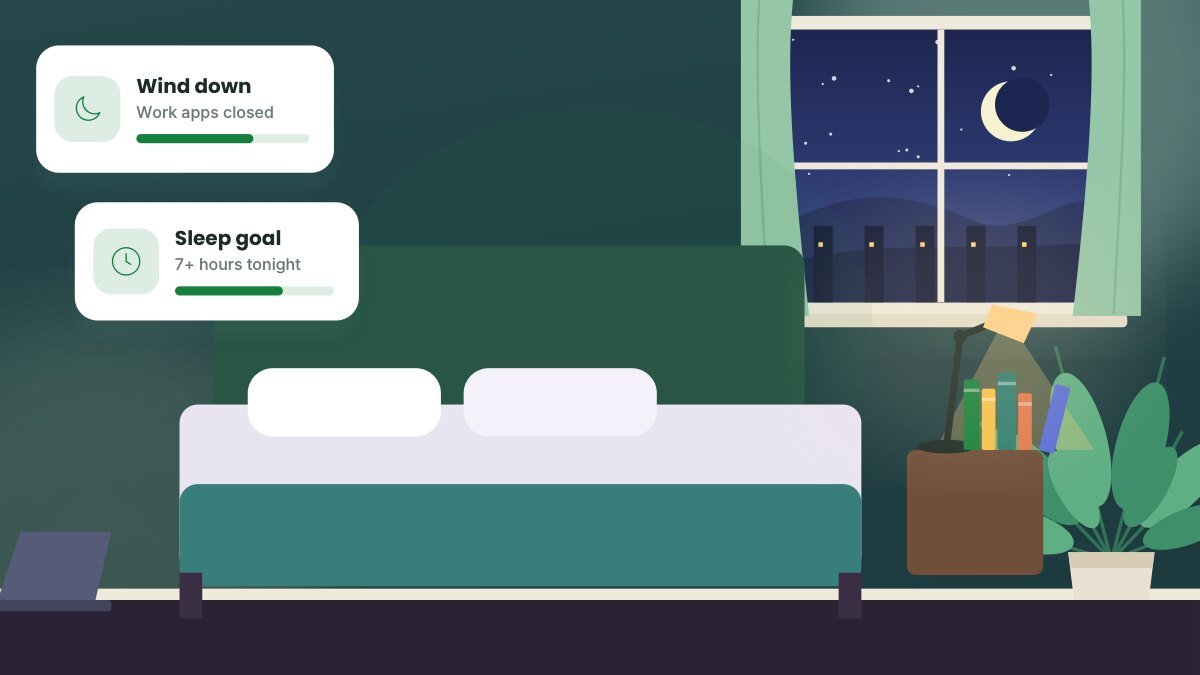
Create an evening shutdown ritual. Write tomorrow's top priority, close all work apps, shut down your laptop and say "done for the day." A clear end to work helps your mind stop ruminating on unfinished tasks.
Limit screens before bed
Screens can keep your brain alert, and checking work email late at night can trigger stress. Try to:
- Stop work at least an hour or two before bed when possible.
- Turn off work notifications on your phone in the evening.
- Charge your phone outside the bedroom or across the room.
- Replace scrolling with reading a book, stretching or listening to calming music.
Watch caffeine, alcohol and late meals
- Caffeine can affect sleep many hours after you drink it. Many sleep experts suggest avoiding it in the afternoon and evening.
- Alcohol may make you sleepy at first but can disrupt sleep later in the night.
- Heavy meals close to bedtime can make it harder to fall asleep.
Move during the day
Regular physical activity supports better sleep. Try to finish vigorous workouts a few hours before bedtime if you find they keep you awake.
Create a sleep-friendly bedroom
- Keep it cool, dark and quiet.
- Use blackout curtains if streetlights or early sun wake you.
- Consider a white noise machine for noisy environments.
- Make your bed a place for sleep, not laptops or work calls.
Be careful with naps
Short naps can be refreshing, but long or late-afternoon naps may make it harder to fall asleep at night. If you nap, keep it brief and early.
Manage stress and worry
Remote work stress can follow you to bed. Jot down worries and to-dos before your evening routine so they're out of your head. Breathing exercises or light stretching can help you wind down.
When to get help
Talk with a healthcare provider if you regularly have trouble falling or staying asleep, snore loudly, feel excessively sleepy during the day or notice sleep problems affecting your work or mood. Sleep disorders such as insomnia and sleep apnea are common and treatable.
Related guide: Desk Ergonomics: How to Set Up Your Workstation to Prevent Pain
Key takeaways
- Aim for at least seven hours of sleep and keep a consistent schedule.
- Get morning daylight and move during the day.
- Keep work out of the bedroom and create an evening shutdown ritual.
- Limit late screens, caffeine and alcohol, and seek help for persistent sleep problems.
Frequently asked questions
Is it okay to work late if I sleep in?
Flexibility can work if you keep a consistent schedule. Problems arise when bedtimes and wake times shift unpredictably.
Does working from bed affect sleep?
It can. Using your bed for work may weaken the association between your bed and sleep.
What's a good evening routine for remote workers?
End work at a consistent time, do a short shutdown ritual, move your body, eat dinner away from your desk and wind down without work screens.
This article is for general informational purposes and isn’t a substitute for professional legal, medical, tax or financial advice. See our disclaimer.